- The Standard
- Posts
- ✍️ another boring corporate newsletter
✍️ another boring corporate newsletter
The 5 operating principles behind newsletters people actually want to read.
Have you heard the news?
Which makes sense.
Email is one of the few platforms where you actually own your audience.
It isn’t controlled by an algorithm, can’t disappear after a platform update, and doesn’t evaporate when organic reach drops off.
Right now, there's a widening gap between teams owning audience relationships and teams just maintaining a presence — and most company newsletters are on the wrong side of it.
So this week, we broke down what beehiiv founder Tyler Denk and our co-founder Alex Lieberman learned while turning Morning Brew into a newsletter millions of people look forward to every day.
Here’s the operating model behind how these two built newsletters people actually want to read.
Let’s get into it.

Most company newsletters don’t fail dramatically.
They just become something nobody would really miss if they disappeared.
They just become something nobody would really miss if it disappeared.
The email still goes out every week. The list might even keep growing. But underneath it, engagement softens, replies dwindle, and eventually the newsletter becomes another piece of marketing infrastructure everyone maintains but nobody actually cares about.
Until eventually, you don’t care about it either.
Morning Brew learned early how to avoid the “not with a bang, but a whimper” fade into obscurity.
"For the longest time, newsletters were treated as marketing channels to drive people to an end destination," says Alex. "Morning Brew was one of the first to treat a newsletter as the product."
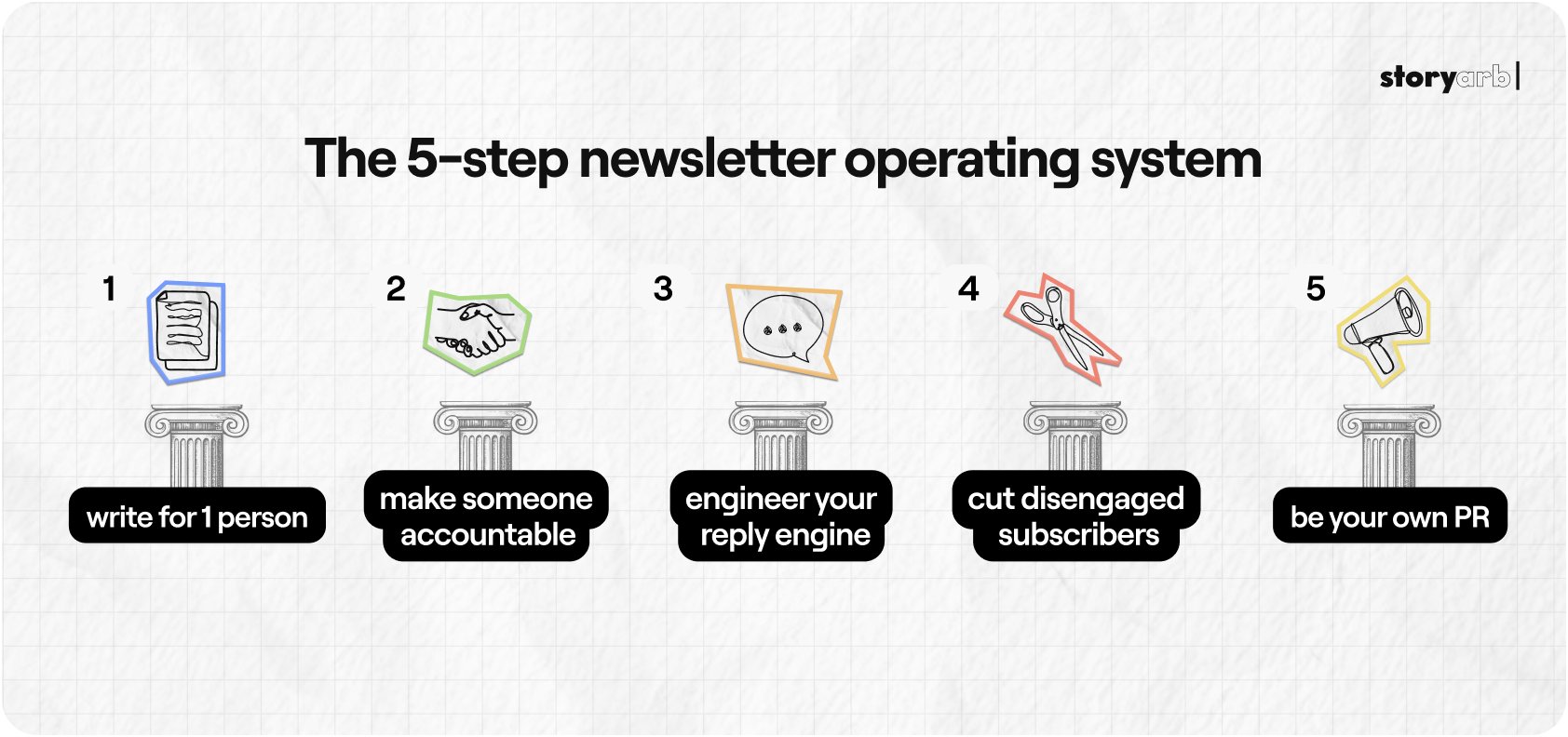
Write for 1 person
Most newsletters are written for an audience segment.
“Marketing leaders.”
“Operators.”
“Founders.”
But the broader the audience definition gets, the more generic the newsletter usually becomes.
(Seriously. Who gets fired up about talking to “operators-cleaned-list-2026”? Who is “operators-cleaned-list-2026”?)
Morning Brew learned to narrow aggressively, because once the reader becomes specific, editorial decisions get clearer.
At storyarb, that looks less like writing for “marketers” and more like: “What would HubSpot’s CMO Kipp Bodnar actually forward to his team?”
(Hey, Kipp 👋🏻)
Someone’s gotta own it
Most newsletters are everyone’s responsibility, which means they’re nobody’s responsibility.
Content gets drafted by marketing, reviewed by leadership, softened by stakeholders, and eventually approved because the calendar says it needs to go out.
Alex has a much simpler philosophy: “Someone’s ass has to be on the line.”
The best newsletters have a clear editorial owner. One person accountable for whether it’s actually worth opening.
Not whether it shipped. Whether it mattered.
That standard changes the product immediately.
Engaged readers > big list
Most teams optimize newsletters for opens. Morning Brew obsessed over replies.
From the beginning, their writers responded constantly to reader emails because they understood: when someone unexpectedly hears back, it changes how they experience the newsletter.
And readers who feel connected don’t just keep opening. They forward the email. They reply again. They become the kind of subscribers who help grow the audience for you.
Alex compared it to DMing a celebrity and actually getting a response back. That “holy shit” moment creates a level of loyalty most marketing teams never engineer for.
Tyler and Alex’s remaining principles are where newsletters stop acting like marketing collateral and start becoming actual business assets.

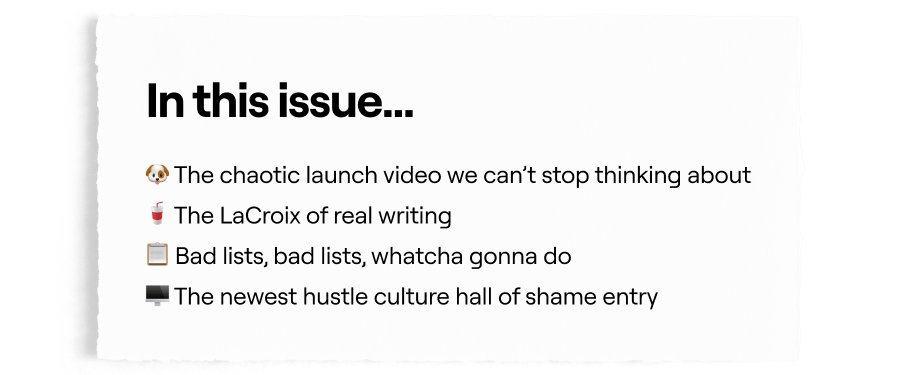
Campaigns that got us talking: Clay launched Functions with what might be the most chaotic product video of the year. Featuring a chest slap, a dog named Shaq, and multiple trash can ambushes.
Will anyone walk away understanding what Function is? Actually, maybe. Will we stop thinking about Shaq? Never.
AI spotlight: When everyone can generate clean, polished, perfectly acceptable content in 12 seconds, “acceptable” stops being enough.
The advantage is shifting from “who can make content” to “who actually has taste.”
Stuff that makes us scroll back up: One of the better explanations we’ve seen for why AI writing feels so … off: It’s the LaCroix of real writing.

Essentially, we write newsletters.
Especially if you:
Have a dormant (or disastrously disorganized) CRM
Have a big ol’ rented audience (that could disappear with the next big algo update)
Have a ton of expertise across your team (and keep forgetting to, like, share it with the world)
But don’t just take our word for it — read about some of our client success here.
Alternatively, just do take our word for it, and grab some time with Abby to discuss your newsletter strategy.

Paying the person next to you on a flight $100 so you can turn their tray table into your second-monitor workstation.
Grindset culture has crossed into “forgot how to behave in public” territory.

There are about a million newsletters people swear you “need to read.”
What do you actually want to read?
The brands people actually remember sound like there's a real person behind them. Building something worth missing is less about volume and more about a handful of decisions most teams never get around to making — until now.
See y’all next time.
— the storyarb writers’ room 🫡
Oh! And another thing... Two decades later, Oprah’s “You get a car!” moment is apparently still the internet’s preferred format for announcing things — newsletters, office snacks, LinkedIn promotions.
You get a newsletter! You get a donut! You still don’t beat the algorithm!

Reply