- The Standard
- Posts
- ✍️ can you just make it go viral?
✍️ can you just make it go viral?
Taste is the new distribution.

What if we just hire a famous person?
Ever been in that meeting? The one where someone floats the idea that what the brand really needs is a celebrity partnership. Or a TikTok influencer. Or maybe both.
The logic is understandable—attention is hard to earn. Borrowing someone else’s audience sounds easier than building from scratch. But marketing history is full of reminders that celebrity ≠ cultural relevance. (See: Pepsi’s Kendall Jenner moment.)
So how do you keep your marketing culturally relevant, without being gimmicky?
This week’s issue is about how to do that—and why a borrowed basketball court and a few Spirit Halloween props might take you further than you think.
Let’s get into it.

Cultural relevance has two ingredients:
Distribution
Taste
Most teams obsess over the first, but the real advantage lives in the second. You don’t just need a bigger megaphone.
You gotta know what to shout through it.
Borrow attention instead of building it
The traditional marketing instinct is to home-grow your audience:
Build the newsletter
Grow the LinkedIn following
Drive people back to owned channels
But organic reach on brand accounts keeps shrinking, while creators keep gaining distribution.
Morgan Selzer’s Make Your Brand Famous playbook makes the alternative clear: Borrow audiences instead of building them from scratch.
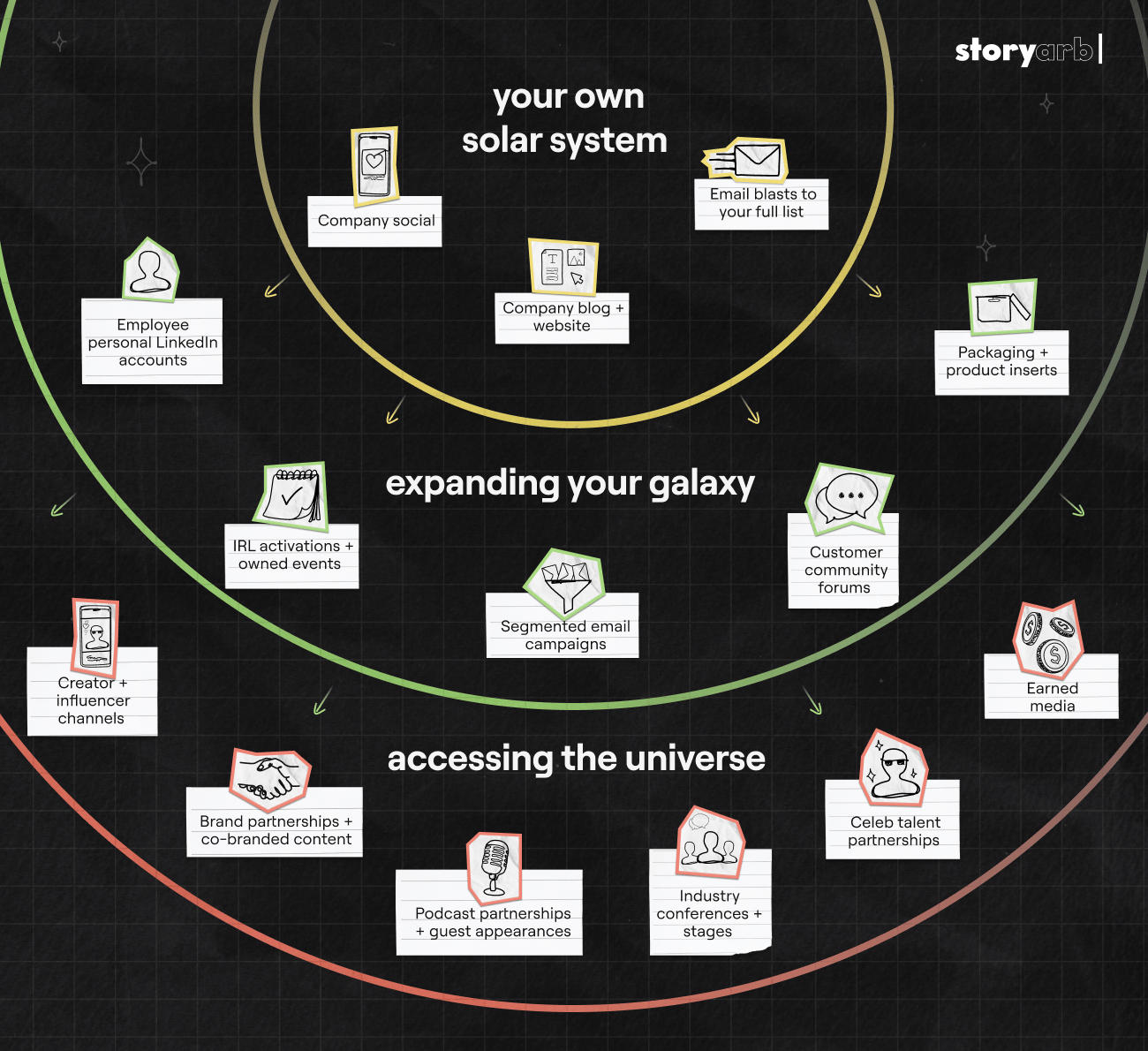
The Headspace x Sesame Street partnership she ran is a perfect example.
Instead of publishing mindfulness content for kids on Headspace’s YouTube channel, they released it directly on Sesame Street’s.
The Street already had the audience.
So Headspace’s content instantly reached millions of families through a channel they already frequented.
Where distribution and taste intersect
Ariel Rubin at Air frames cultural relevance through what he calls the Moonshot Matrix.
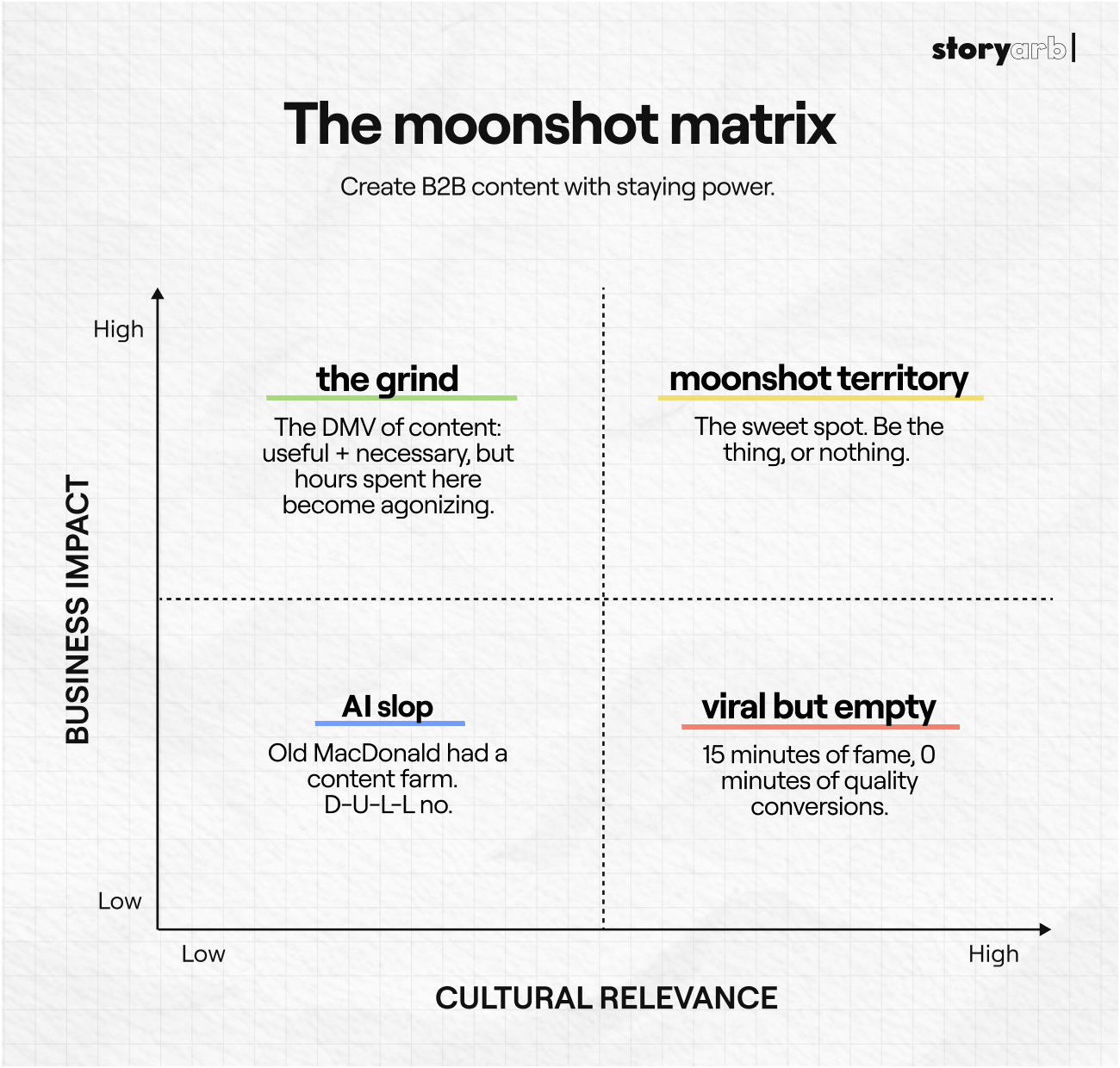
Every marketing idea sits somewhere between two forces: cultural relevance + business impact.
Most B2B marketing falls into one of three predictable places.
The grind: High business impact, low cultural relevance. Webinars, whitepapers, product explainers. Useful, but forgettable.
Viral but empty: High cultural relevance, low business impact. Content that spreads widely but attracts the wrong audience.
Safe but invisible: Reasonably useful, reasonably polished—and completely interchangeable with everything else in the feed.
The opportunity is the fourth quadrant, moonshots—work that is both culturally interesting and commercially relevant.
Air’s campaign with creator The Rizzler landed squarely there.
Instead of publishing another product explainer, Air partnered with a fast-rising creator their audience was already watching and built something genuinely entertaining around the product.
The production budget was almost nonexistent. They shot the entire thing on a borrowed basketball court using props from Spirit Halloween.
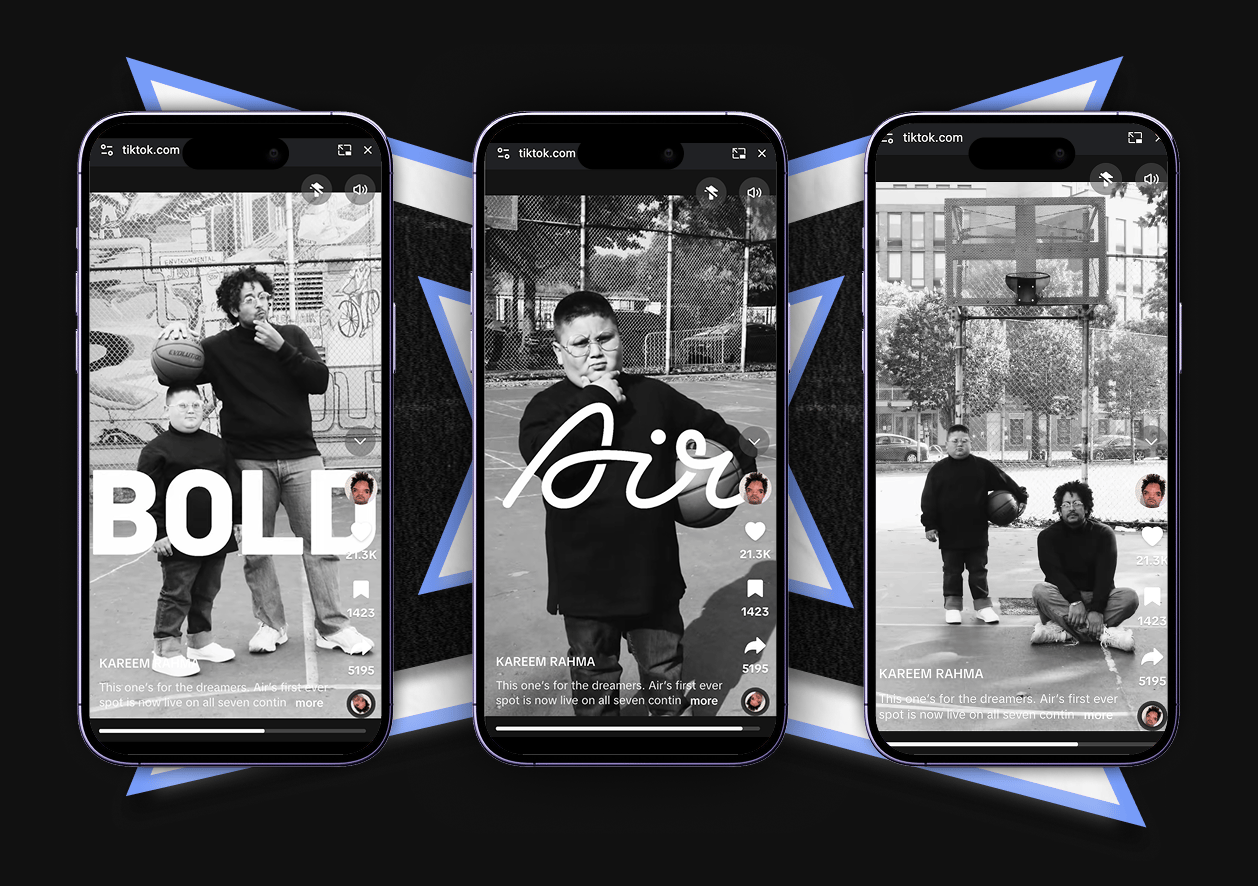
More importantly, it drove massive awareness in the exact creative community Air sells to, and helped the company close a $35M Series B.
Attention travels.
Know what’s interesting
Culturally relevant ideas rarely appear out of nowhere. They come from marketers who are paying attention long before the campaign exists.
The operators who consistently spot cultural opportunities tend to share a few habits.
First: They treat trend scanning like research, not procrastination.
Morgan Selzer actually recommends blocking time every week to do exactly this. Wander through:
TikToks.
Podcasts.
Magazines.
Creator accounts.
Rabbit holes.
You don’t want to copy trends—but it’ll help you understand what people are actually paying attention to.
Taste-making marketers tend to spend time in the same media ecosystems as their buyers, then learn to follow emerging creators before those creators become mainstream.
Taste compounds the same way product knowledge does. The more signals you absorb, the faster you recognize the idea that’s actually worth making.
The real test
Ariel Rubin has a simple benchmark for cultural impact: Did the campaign make it into people’s group chats?
Because once your marketing shows up there, distribution takes care of itself.
Taste is the new distribution.

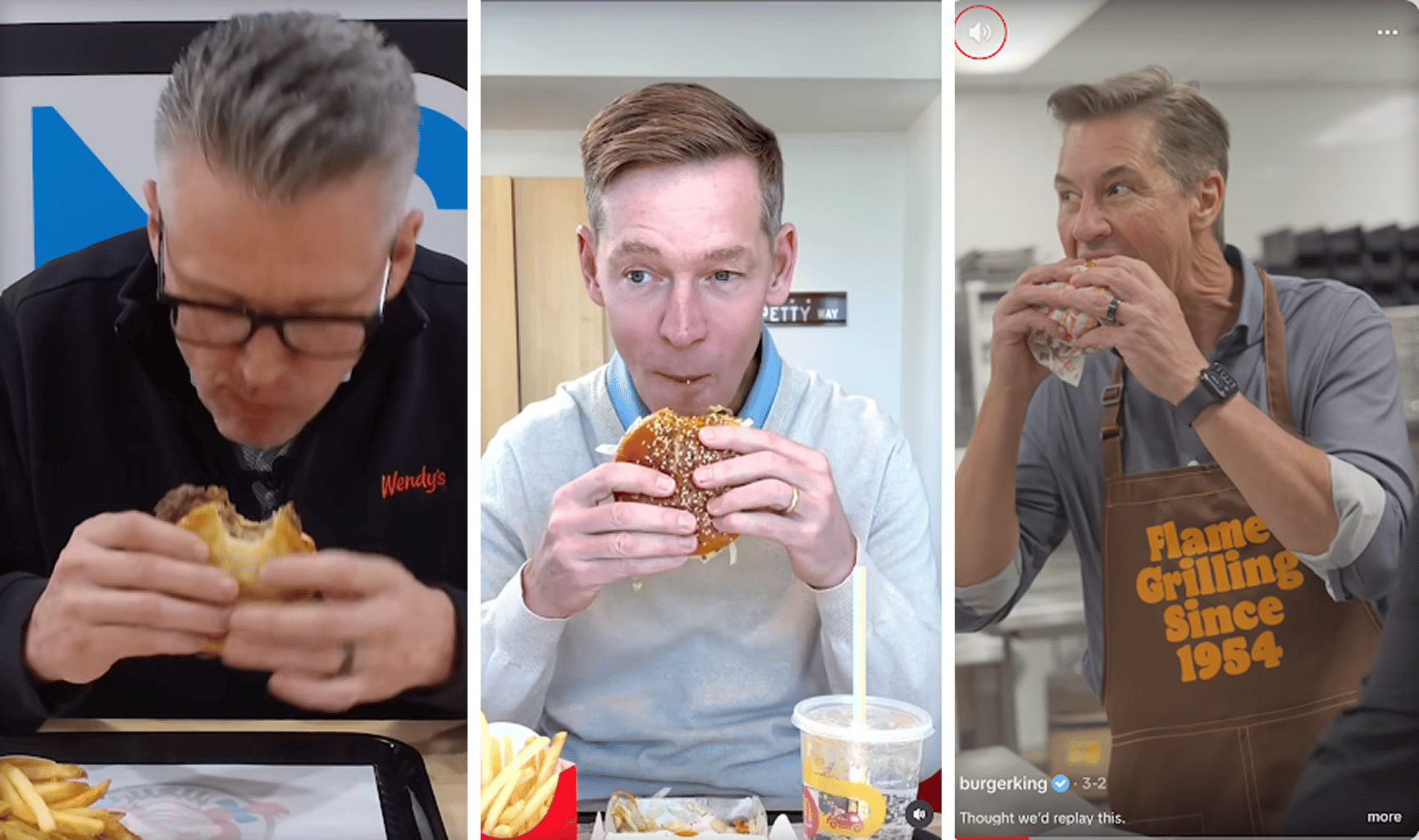
Campaigns that got us talking: McDonald’s posted a new burger product promo. Burger King and Wendy’s responded almost immediately.
Brand rivalry is still the internet’s favorite campaign format.
AI spotlight: OpenAI at the dinner table: “I raised record-breaking capital! Annnd then 1.5M users left my platform.”
Mom: …Claude, honey, would you like to share next?
Stuff that makes us scroll back up: We’re officially past the halfway point of storyarb’s 2026 Own the Internet contest. Lately, the team’s been sharing thoughts on our tech stack, what makes great writing, and why we aren’t too worried about being replaced by bots...

Here at storyarb, we like to think we’re fairly self aware.
We’ve done the research to know that AI mentions aren’t the most effective marketing tool across the board.
But mascots? Mascots are different. They’re memorable. They’re joyful. And sometimes they offer a fresh angle on the same old take.
So we started wondering: What happens when the ‘bot is the ‘cot?
Meet b’arb, storyarb’s AI assistant.

b’arb bein’ b’arb
“My job is to help you understand what we do and how our process can sharpen + scale your B2B content. Our story is telling yours, so go ahead and hand us that pen. Don’t worry, I’ll let my colleagues with feelings and opposable thumbs take it from here.”

This week—job titles.
Just scrolled past a job posting for “Director of Value Creation.”
Which sounds six-figures impressive until you try to explain it to another human.

Great marketing doesn’t require a famous person or a massive budget. (Famous bot mascots, we’ll allow.)
It requires paying attention to the right things before everyone else does. Now go forth, and make scrolling through TikTok part of your marketing strategy.
We’ll be watching the group chats.
See y’all next time.
— the storyarb writers’ room 🫡
Oh! And another thing... During the 1980s “burger wars”, Wendy’s Where’s the Beef? ads were so effective at mocking the tiny patties of McDonald’s and Burger King that Wendy’s sales jumped about 31% and the catchphrase became a national meme.

Reply