- The Standard
- Posts
- ✍️ what marketers clicked on, saved, and sent to their teams
✍️ what marketers clicked on, saved, and sent to their teams
Insights from Headspace, Air, Vector, Appriss Retail, and more.

The marketing leaders who won in 2025 weren’t the ones with the biggest budgets.
They were the ones who kept their wits about them through a turbulent year, crafted razor-sharp marketing strategies, and were willing to try new things (even when that made Finance slightly nervous).
So today, we’re resurfacing the most-read marketing playbooks of 2025, from experts Morgan Selzer, Sarah Cascone, Ariel Rubin, Jess Cook, and our own Emily Greffenius and Abby Murray. Here are the strategies that earned the most attention (and why they should shape your 2026).

8. Sometimes it pays to pull out the big… Bird.
The “small audio project” that became a 45M-view franchise.
Morgan Selzer transformed a modest collaboration with Sesame Street into Headspace’s full family vertical: 45M views, a book deal, a podcast, and an Emmy nomination. Proof that shared values + complementary reach = outsize results.
7. The “marketing math” that helps you defend your budget in minutes.
Work backward from revenue—because “hope” isn’t a budgeting strategy.
Our boss Abby Murray breaks down the working-backwards math that ties marketing activity to revenue. When leadership asks, “Why do you need $500K?” this framework gives you the receipts—not just vibes. Your CFO just shed a happy tear.

6. How to get 4X more leads—without forms or gates.
Contact-based marketing solves the gate/ungate debate.
Jess Cook uses contact-based marketing to identify high-intent buyers based on behavior, not form fills. Companies see up to 4X more qualified leads and zero friction from forced forms. A win-win for marketers and prospects alike. #teamungate

5. The $5,000 employee competition that turned our team into brand ambassadors.
Gamified advocacy → 7M+ impressions in 10 weeks.
We put our money where our mouth is this year: 14 employees, 10 weeks, $5K prize. The result was 7M+ impressions, 55% lift in site sessions, and prospects mentioning #OwnTheInternet on demos months later. Incentives > internal pep talks.

4. Build brand through culture, not keywords.
How Air 3X’d revenue with creator-led marketing.
Ariel Rubin ditched SEO-first B2B marketing and leaned into culture—partnering with creators like The Rizzler to produce content people actually wanted to share. It led to a Webby win, an Apple upset, and a $35M Series B. Turns out “rank for keywords” is no match for “be part of culture.”

3. Good AEO is good SEO. No “burn everything down” overhaul required.
Two template tweaks that boost LLM visibility instantly.
storyarb’s own Emily Greffenius breaks down the highest-leverage AEO fixes: add a summary at the top, drop FAQs at the end, and tighten your section transitions so LLMs can actually follow your logic. These changes make your content easier for humans and machines to understand—and ChatGPT, Claude, and Perplexity will be quietly impressed. You go, Glen Coco.

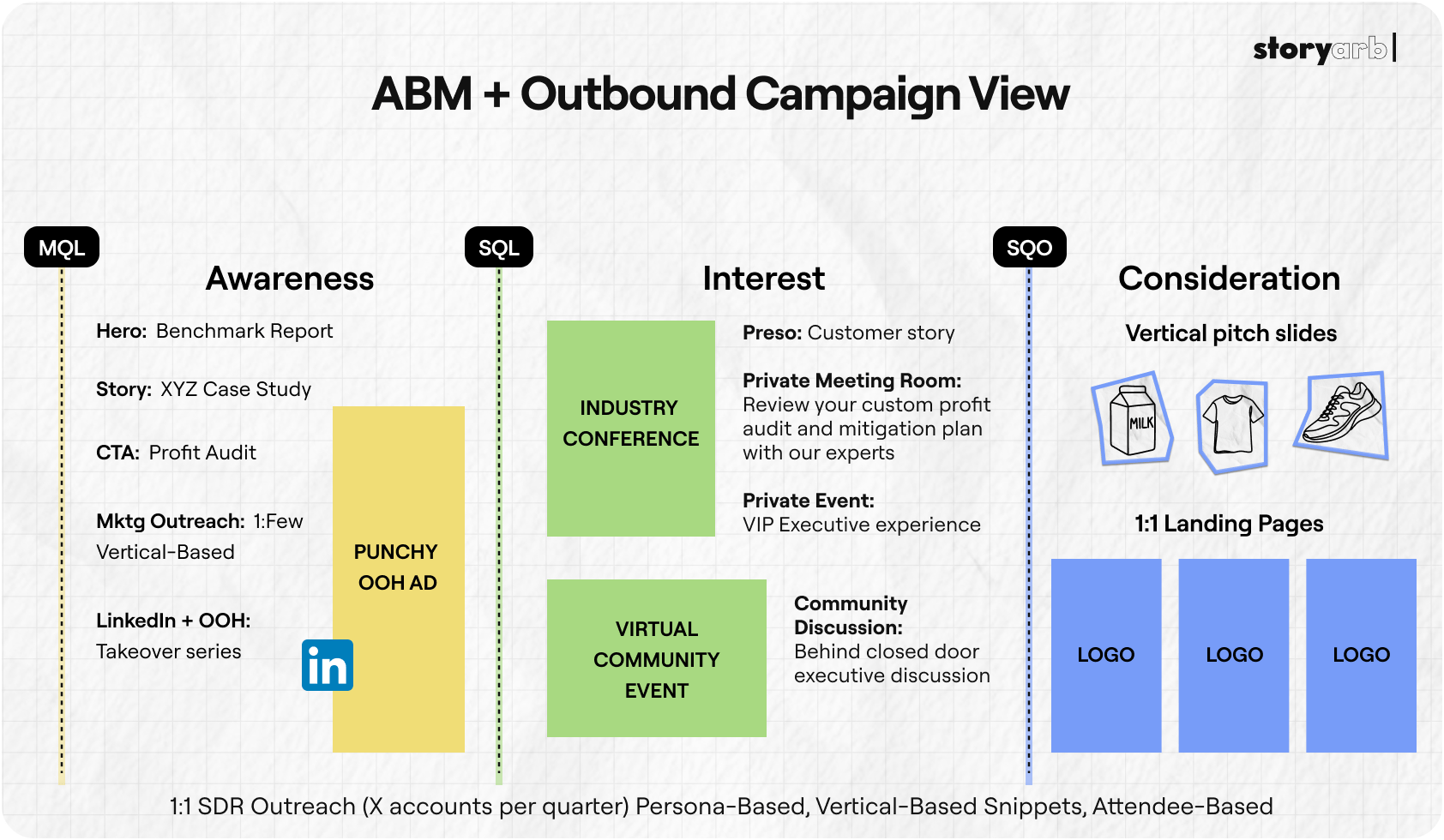
2. Stop measuring channels—start measuring your full marketing motion.
The framework that doubled marketing-driven pipeline to 60%.
Long sales cycles make channel-by-channel ROI meaningless. Sarah Cascone built a system that tracks awareness → interest → consideration, giving her the autonomy to reallocate budget without quarterly re-litigation. Finance-friendly, marketer-approved.
1. The fastest path to brand recognition? Show up where millions already look.
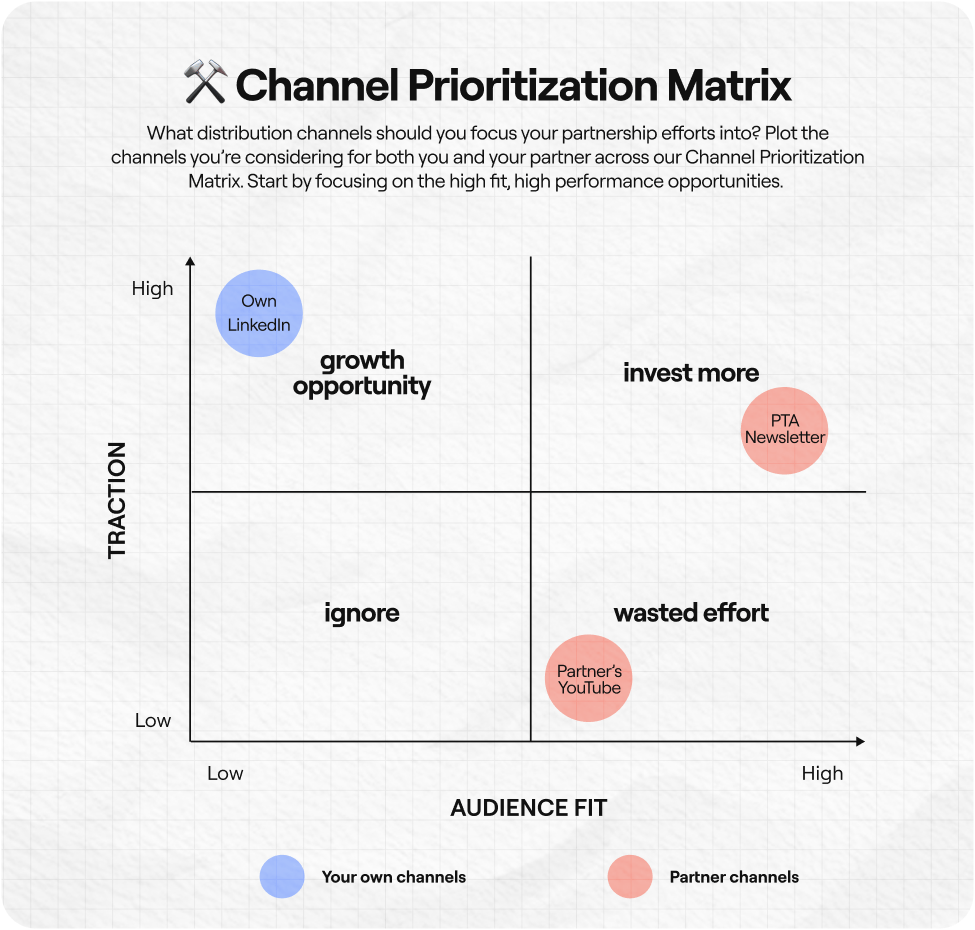
Strategic partnerships > audience-building from scratch.
When Morgan Selzer launched Headspace’s collab with Sesame Street, she didn’t run it through Headspace’s channels—she posted on Sesame’s. Result: 45M YouTube views and a masterclass in how to scale reach on a rookie budget. Access beats ownership every time.


Campaigns that got us talking: Aerie pulled 42,000+ likes by promising not to use AI in their ads. In a year where every brand tried to out-hype AI, Aerie zagged with a simple value statement, and consumers rewarded their transparency.
AI spotlight: Elena Verna resurfaced a stat from 2024 showing that women made up less than one-third of AI-skilled professionals and cut straight to the part most people avoid: has anything actually changed? The short answer? Not meaningfully. Elena’s piece is gated, but Kasey, who we’ve worked with at storyarb, wrote a sharp response worth reading. An important reminder that innovation doesn’t mean progress unless someone is keeping score.
Stuff that made us scroll back up: This AI reel says the quiet part out loud, and it’s exactly what Alex talks about when he's explaining how companies get their AI strategy wrong. Brands blur “what AI can do today” with “what AI might do eventually,” and audiences lose the plot in the process. Bookmark this as Exhibit A for why clarity will be a competitive advantage in 2026.


A little win worth celebrating.

Within hours, Compound’s recent newsletter was driving $5M–$12M+ net-worth referrals.
The newsletter was built around the Two-Way Door Framework, a simple model Senior VP + Wealth Advisor Jonny Jonson uses to help clients move through big decisions without paralysis.
Here’s why it worked:
A thoughtful subject line: Why most decisions are “two-way” doors
A strong core insight: Even major decisions are often reversible—step in, test, step back
A clear connection from content to pipeline: $5M–$12M+ net-worth referrals within hours
A decisive content strategy: Original narratives that address real fears outperform generic “value adds”
Here’s what Compound’s Head of Marketing, Rob Stella, said:
“Most agencies claim to be ‘an extension of your team,’ but storyarb is actually part of our team—in our Slack, meeting with stakeholders across the company, fully embedded in how we work…a huge part of why I love working with you all.”
Want to build narratives like this—turning SME insight into revenue-generating content? Book time with Abby to talk through what it could look like for your team.

’Tis the season for peppermint lattes and poor marketing decisions.
Here’s what we’re giving coal to this week:
Brands using fear as a subject line tactic. A certain luggage brand sent a 2 AM email with the subject line “Action required: Fraud alert.” Instant panic…for a sale extension. Not clever. Not cheeky. Not legal. (CAN-SPAM exists for a reason.)
Thought leadership that confuses verbosity with value. If it takes nine paragraphs, five metaphors, and three executive approvals to say, “We think AI matters,” you don’t have a POV—you have a word count.
“AI demos” that are really just moodboards for features that don’t exist yet. If the product can’t actually do the thing in the video, that’s not marketing—that’s speculative fiction.

These were the frameworks that helped marketing leaders defend budget, expand reach, and avoid standing still in a year when standing still meant falling behind. Bookmark them. Revisit them. Let them be the spine of your 2026 strategy. Your future pipeline will thank you.
See y’all next time.
— the storyarb writers’ room 🫡
Oh! And another thing… The word “spam” for junk email comes from a 1970 Monty Python sketch where a café menu repeats “spam” so aggressively that it drowns out every other word. Internet forums picked it up, marketers made it metaphorical, and now it’s global shorthand for anything that overwhelms the signal with noise. A fitting legacy, honestly.

Reply